





Can I Customise a Lab Diamond Engagement Ring with UK-Based Jewellers?
One of the most common questions I hear from couples is, "Can we create something truly unique?" The answer is a resounding yes, and it’s one of the most rewarding parts of my work.
The idea of a bespoke or custom-made engagement ring can seem intimidating, but with the right UK-based jeweller, it’s an incredibly personal and exciting journey.
Especially when it comes to lab grown diamonds, customisation opens up a world of possibilities, allowing you to get a larger or higher-quality stone for your budget, and then craft the perfect setting around it.
Over my 10 years in the UK jewellery industry, particularly in Hatton Garden, I’ve seen a significant shift.
People no longer want to just pick a ring from a catalogue or a window display; they want to be part of the story.
They want a ring that reflects their partner’s personality, their shared journey, and their individual style.
This is where the magic of customisation comes in, and working with a local UK bespoke jeweller makes the process seamless, transparent, and far more personal.
But what does customising a lab diamond engagement ring actually involve?
It's not as complicated as you might think.
It's a collaborative process between you and your jeweller, a partnership to bring a vision to life.
Let's walk through the journey together, step-by-step, and explore why choosing a Hatton Garden based artisan for this special creation is one of the best decisions you can make.
Table of Contents
1. The Benefits of Customising with a UK-Based Jeweller
2. The 5-Step Customisation Journey
- [1. Inspiration & Initial Chat]
- [2. Diamond Selection]
- [3. Setting & Metal Choices]
- [4. CAD and/or 3D Prototype Review]
- [5. Craftsmanship in the UK by Best Artisans & Final Delivery]
3. [Conclusion: A Ring That's Truly Yours
The Benefits of Customising with a UK-Based Jeweller
Before we dive into the process, it’s worth understanding why so many people are choosing to work with a UK based jewellers for their bespoke rings. It’s about more than just supporting local business; it offers tangible advantages that protect your investment and enhance the experience.
Benefit |
Why It Matters |
|
UK Hallmarking |
Guarantees the purity and quality of your precious metal (e.g., platinum, 18k gold), as certified by an independent UK Assay Office. It’s a legal requirement and your assurance of quality. |
|
Direct Communication |
You can speak directly with the designer or artisan. This makes design consultations clearer, feedback is understood instantly, and the final piece is more likely to match your vision perfectly. |
|
Faster Timelines |
With no international shipping delays, customs hold-ups, or time zone differences to contend with, the entire process from design to delivery is significantly quicker and more reliable. |
|
Ethical Standards |
Working with a UK jeweller ensures adherence to strict UK labour laws and ethical standards. You can be confident your ring was crafted in a safe, fair environment. |
|
Consumer Protection |
Your purchase is protected by UK consumer rights, including distance-selling regulations and warranty laws. This provides a level of security that can be difficult to enforce with overseas vendors. |
The 5-Step Customisation Journey
Creating a custom lab diamond engagement ring is a structured and collaborative process. Here’s a breakdown of the typical journey you’ll embark on with a UK-based jeweller.
1. Inspiration & Initial Chat
This is where the dream begins. It all starts with a conversation.
You don’t need to have a fully-formed design in your head; in fact, it’s often better if you don’t.
All you need are a few ideas. Have you seen a ring on Pinterest that you loved?
Is there a particular style your partner always points out?
Perhaps it’s a vintage detail from a family heirloom or the architectural lines of a favourite building.
Bring these snippets of inspiration to your initial chat.
A trusted hatton garden jeweller will act as a guide, listening carefully to understand your partner’s style, their lifestyle (are they very active? do they work with their hands?), and your budget.
This conversation is less of a sales pitch and more of a creative brainstorming session.
We’ll talk about what’s possible, what’s practical, and how we can translate those initial ideas into a cohesive design.
It’s about getting to know you and ensuring the final ring is a true reflection of your partner.
2. Diamond Selection
Once we have a design direction, the focus turns to the star of the show: the lab grown diamond.
Because you're not paying the premium of a mined diamond, you have incredible flexibility.
You can prioritise size, clarity, or colour to get a truly spectacular stone.
This is one of the most exciting parts of customising a lab grown diamond engagement ring.
Your UK jeweller should educate you, not just sell to you.
They should show you a curated selection of diamonds, explaining the nuances that go beyond the '4 Cs'. This is where working with an experienced Hatton jeweller truly matters.
Education Beyond the 4 Cs
Whilst carat, colour, clarity, and cut are important starting points, they don't tell the whole story.
A truly knowledgeable jeweller will go deeper:
The Critical Importance of Cut: Cut is the only 'C' controlled by human hands, and it's what brings a diamond to life.
Even a flawless, colourless diamond will look dull if it's poorly cut.
Your jeweller should explain how table percentage, crown angle, and pavilion depth work together to create brilliance and fire.
For round diamonds, look for 'Excellent' or 'Ideal' cut grades. For fancy shapes like oval, pear, or marquise, there's no standardised cut grade, so you need to rely on your jeweller's expertise to assess proportions visually.
Avoiding the Bowtie Effect:
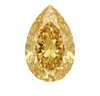
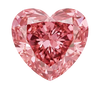
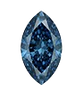
If you're considering fancy shapes particularly oval, pear, marquise, or heart-shaped diamonds you need to understand the bowtie effect.
This is a dark shadow that can appear across the centre of the diamond, caused by light leakage due to poor proportions.
Not all bowties are deal-breakers; a very faint one is common and often acceptable.
But a strong, prominent bowtie significantly reduces the diamond's beauty.
Your jeweller should show you the diamond under different lighting and explain what you're seeing.
This is something a certificate won't tell you you need to see it with your own eyes.
CVD vs HPHT Lab Diamonds:
Lab grown diamonds are created using two main methods: Chemical Vapour Deposition (CVD) and High Pressure High Temperature (HPHT).
Both produce real diamonds with identical physical and optical properties to mined diamonds, but there are subtle differences worth understanding.
CVD Diamonds:
Grown in a chamber where carbon-rich gases crystallise onto a diamond seed. CVD diamonds tend to have fewer metallic inclusions and can be grown in larger sizes more easily.
They may occasionally show faint brown or grey tints that can be treated post-growth.
HPHT Diamonds:
Created by mimicking the natural conditions deep within the Earth extreme pressure and heat.
HPHT diamonds can sometimes show colour more easily (which can be an advantage if you're looking for fancy colours like pink or blue) and may contain metallic inclusions.
For most engagement rings, the growing method matters less than the final quality of the diamond.
A well-cut, eye-clean CVD diamond and a well-cut, eye-clean HPHT diamond will look identical to the Untrained eye, me personally I can the difference and I personally prefer HPHT but that is my own personal preference.
What matters is that your jeweller understands these differences and selects stones based on their final beauty, not just their origin method.
Here’s a simple table to illustrate some choices you might face:
|
Feature |
Option A (Focus on Size) |
Option B (Focus on Quality) |
|
Carat Weight |
2.0 Carat |
1.7 Carat |
|
Colour |
G |
E |
|
Clarity |
VS2 |
VVS1 |
|
Cut |
Excellent |
Excellent (Top-tier proportions) |
|
Impression |
A larger, impressive-looking diamond. |
A slightly smaller but exceptionally bright and flawless-looking diamond. |
3. Setting & Metal Choices
With the perfect lab diamond selected, we move on to its home.
The setting and metal are what will frame your diamond and define the ring’s overall character. During this stage, we’ll finalise the details discussed in our initial chat.
Will it be a classic solitaire to let the diamond do all the talking?
A halo setting to maximise its perceived size and sparkle?
Or a bezel setting for a modern, secure, and practical finish?
We’ll also confirm the band’s width and depth crucial for ensuring a delicate-looking ring is still durable enough for a lifetime of wear.
Choosing the metal is just as important.
Your jeweller will guide you through the options:
The premium choice, known for its durability, hypoallergenic properties, and naturally white sheen that won’t fade or change colour.
A classic, rich choice that offers a beautiful contrast with the white diamond.
A warm, romantic, and slightly more contemporary option.
A popular alternative to platinum, alloyed with white metals and usually plated with rhodium for a bright white finish.
4. CAD and/or 3D Prototype Review
This is the moment the vision truly comes to life.
Your Hatton Garden jeweller will translate the design into a Computer-Aided Design (CAD) model.
This provides you with detailed, multi-angle digital renderings of your ring.
You can see exactly how it will look, check the proportions, and make sure every detail is perfect before a single piece of metal is touched.
Some UK jewellers, myself included, take this a step further by creating a 3D-printed wax or resin prototype.
Holding a physical model of your ring in your hands is a game-changer.
You can try it on, see how it feels, and check the scale and proportions in a way that a digital screen can’t replicate.
It’s the ultimate reassurance.
If anything isn’t quite right, this is the stage to make adjustments.
Tweaking a digital file or re-printing a model is easy; altering a finished ring is not.
Check our reviews section and see how many of our clients talk about the importance of this step and how it was necessary before making the final decision.
5. Craftsmanship in the UK by Best Artisans & Final Delivery
Once you’ve approved the design, the real artistry begins.
This is where working with a UK-based jeweller truly shines.
Your ring will be crafted by a skilled artisan in a Hatton Garden workshop, not mass-produced in an overseas factory.
The process involves casting the ring in your chosen metal, cleaning and polishing it, and then meticulously setting the diamond by hand under a microscope.
Because the work is done in the UK, the jeweller has full control over the quality at every stage.
They can ensure the setting is perfectly secure, the polish is flawless, and the final piece meets their exacting standards.
Once complete, the ring is sent to a UK Assay Office to be tested and hallmarked, your legal guarantee of metal quality.
Finally, the moment you’ve been waiting for:
the final delivery.
Seeing the finished piece, sparkling and perfect, is an unforgettable experience.
It’s not just a ring; it’s a story you helped create, a piece of artistry you commissioned, and a symbol of your unique relationship, crafted with care right here in the UK.
Conclusion: A Ring That’s Truly Yours
Customising a lab diamond engagement ring with a UK-based jeweller is about so much more than just getting a unique design. It’s an experience. It’s a collaboration. It’s the chance to be involved in creating one of the most significant pieces of jewellery you’ll ever own.
From the first spark of an idea to holding the finished piece in your hand, the journey is personal, transparent, and protected by the high standards of UK craftsmanship and consumer law. You’re not just buying a ring; you’re commissioning a piece of art that tells your story, crafted by an artisan who understands your vision.
So, can you customise a lab diamond engagement ring with UK-based jewellers? Absolutely. And it’s an experience I’d recommend to anyone looking for a ring that is as unique and special as the person who will wear it.
About the Author: Amr Ramadan DGA is the Founder of Mouza Fine Jewellery. With over 10 years of industry experience in the UK, he is a diamond researcher who studied at Gem-A London and a former Lead Gemologist in major Hatton Garden showrooms. He specialises in creating bespoke diamond engagement rings, guiding clients through a transparent and personal design journey.
