



Emerald Cut vs Radiant Cut Diamonds. Which Suits Your Engagement Ring?
Selecting an engagement ring centre stone often narrows down to two striking rectangular silhouettes: the timeless emerald cut and the vibrant radiant cut. While both shapes share cropped corners and a parallel outline from a distance, their internal geometry, light reflection, and visual impact could not be more distinct.
Understanding the fundamental differences between an emerald cut vs radiant cut diamond requires looking beyond surface outline into facet construction, light dispersion, and clarity requirements. This guide breaks down the gemmological distinctions to help you decide which cut aligns with your personal style and ring design.
1. Facet Architecture: Step Cut vs Brilliant Cut Diamonds
The defining difference between these two shapes lies in their faceting style.
An emerald cut belongs to the step-cut family. It features rectangular facets arranged in parallel steps along the girdle and pavilion. This architectural layout creates long, clean lines and an open flat table. When light enters an emerald-cut diamond, it produces a distinctive "hall-of-mirrors" phenomenon: broad, alternating flashes of bright white light and dark shadow.
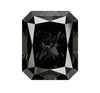
In contrast, a radiant cut is a modified brilliant cut. Created by Henry Grossbard in 1977, the radiant cut applies the complex, triangular faceting pattern of a round brilliant to a rectangular profile. With 70 meticulously angled facets across its crown and pavilion, the radiant cut is engineered for maximum scintillation.
|
Emerald Cut (Step Cut) • Parallel rectangular facets • Open, flat table • "Hall-of-mirrors" light flash • Clean, geometric lines |
Radiant Cut (Modified Brilliant) • Triangular & kite facets • 70 intricate facets • High scintillation & fire • Diffused "crushed ice" sparkle |
When comparing step cut vs brilliant cut diamonds, the choice comes down to visual texture: the emerald cut offers understated, vintage elegance with dramatic flashes, whereas the radiant cut delivers continuous, high-intensity brilliance.
2. Light Performance and Sparkle
When evaluating emerald vs radiant diamond sparkle, the two cuts interact with light in completely different ways:
-
Radiant Cut Sparkle (Fire and Scintillation): Due to its 70 facets, a radiant cut refracts light into hundreds of tiny beams. This creates intense fire (coloured light dispersion) and scintillation (sparkle during movement). It also produces what gemmologists call a "crushed ice" effect, where light bounces dynamically within the pavilion.
-
Emerald Cut Sparkle (Lustre and Contrast): An emerald cut prioritises optical clarity and sharp contrast over raw sparkle. Rather than scattering light into small points, it reflects broad beams. This subtle glow relies heavily on precise cut symmetry and high polish.
If your ideal stone catches light across the room with fiery brilliance, the radiant cut excels. If you prefer a sophisticated, understated lustre with geometric clarity, the emerald cut is unmatched.
3. Clarity and Inclusions: What You Need to Know
Because their optical structures differ, clarity requirements vary significantly between the two shapes.
|
Feature |
Emerald Cut |
Radiant Cut |
|---|---|---|
|
Table Openness |
Wide, transparent |
Faceted, diffuses light |
|
Inclusion Masking |
Very Low |
Very High |
|
Recommended Clarity |
VS2 or higher |
SI1 or SI2 (Eye-clean) |
|
Focus Point |
Purity & Precision |
Sparkle & Fire |
Emerald and Radiant Diamond Clarity Comparison
When examining emerald and radiant diamond clarity, the emerald cut's wide, flat table acts like a transparent window directly into the heart of the stone. Internal inclusions, such as dark crystals, feathers, or clouds, are easily visible without the optical distraction of brilliant facets. Consequently, gemmologists recommend a minimum clarity grade of VS2 for emerald cuts to ensure the diamond appears eye-clean.
Radiant cuts are far more forgiving. The dense web of triangular facets disperses light throughout the diamond, effectively hiding minor inclusions. A radiant cut graded SI1 or even SI2 will frequently appear completely eye-clean to the naked eye, allowing buyers to allocate more of their budget towards carat weight or metal choice.
4. Proportions, Length-to-Width Ratios, and Face-Up Size
Both shapes offer versatility in their length-to-width (L/W) ratios, allowing for either traditional square silhouettes or elongated proportions that lengthen the finger.
-
Classic Emerald Ratios: A traditional rectangular emerald cut typically features an L/W ratio between 1.30 and 1.50, with 1.40 representing classic proportions. Square emerald cuts (often referred to as Asscher-like profiles) sit closer to 1.00–1.05.
-
Classic Radiant Ratios: Elongated radiant cuts generally range from 1.15 to 1.35, while square radiants sit between 1.00 and 1.08.
Face-Up Visual Footprint
Emerald cuts generally have a slightly larger "face-up" area per carat than radiant cuts. Because an emerald cut distributes more of its weight across a shallower body and wider table, a 2.00-carat emerald cut often appears marginally larger from above than a 2.00-carat radiant cut, which carries slightly more weight in its pavilion to support its complex faceting.
5. Colour Retention and Metal Selection
Diamond faceting also affects body colour perception:
-
Radiant Cuts: The intense internal reflection of modified brilliant facets can accentuate body colour. While this makes radiants popular for Fancy Colour diamonds (such as canary yellows), white radiant diamonds can show slight warmth in lower colour grades (I–J). Setting a radiant cut in 18ct white gold or platinum helps maintain a crisp, icy appearance.
-
Emerald Cuts: Step facets do not concentrate colour in the same way, but their open table means any tint in the rough diamond remains visible. For a bright white look, colour grades from D to F are ideal in white metals, while G or H grades pair beautifully with 18ct yellow gold or rose gold mountings.
6. Summary Comparison: Emerald Cut vs Radiant Cut
|
Feature |
Emerald Cut |
Radiant Cut |
|---|---|---|
|
Cut Style |
Step cut (parallel lines) |
Modified brilliant cut |
|
Facet Count |
37 to 57 facets |
70 facets |
|
Sparkle Character |
Hall-of-mirrors, broad flashes |
High fire, crushed ice scintillation |
|
Clarity Requirement |
High (VS2+ recommended) |
Moderate (SI1–SI2 often eye-clean) |
|
Visual Impression |
Vintage, refined, architectural |
Modern, vibrant, high-brilliance |
|
Best Suited For |
Clean design, solitaire rings |
Statement sparkle, halo or trilogy settings |
Choosing the Right Cut for Your Ring Design
Your final decision comes down to aesthetic priorities:
1. Choose an emerald cut if you appreciate vintage art-deco lines, value crystal-clear transparency over intense sparkle, and plan to select a stone with high clarity. Explore our bespoke Emerald-cut engagement rings to see how this shape pairs with solitaire and bezel mountings.
2. Choose a radiant cut if you want the sleek rectangular shape of an emerald cut combined with the maximum brilliance of a round diamond. Browse our collection of Radiant-cut engagement rings to view classic and claw-set designs.
For a broader overview of facet designs, proportions, and setting compatibility, consult our comprehensive Diamond shapes and cuts guide.
Gemmological References & Benchmark Sources
-
Gemological Institute of America (GIA) – Diamond Cut & Optical Dynamics Research
-
CIBJO (World Jewellery Confederation) – Diamond Grading Standards
-
Queensmith Radiant & Emerald Cut Buying Benchmark
